Banks are now handing small business owners AI agents, AI training, and AI toolkits. Some of it is a real gift. Here is how to tell which parts give you back Time, Money, or Energy, and what to ask before you hand over your business data.
By Warren Schuitema, AI Systems Consultant, Matchless Marketing / Matchless AI
Published: November 5, 2026 | Last Updated: November 2026
My bank used to send me two kinds of mail. Statements, and credit card offers.
This fall, banks started sending something new. AI.
On October 19, Huntington Bank announced The 1866 Studio, an AI "operating system" for small business owners, built with Google Cloud. It comes with AI agents that help you start a business, write your marketing, and get ready for a loan. Three days later, Goldman Sachs opened a Small Business AI Institute as part of a new $500 million commitment, with Anthropic, Google, Meta, and OpenAI all taking a role.
So should your small business use the AI tools your bank is offering? Here is the short answer. Yes, the training is worth taking, and the tools are worth a test drive. But treat your bank like any new AI supplier. Before you connect anything, find out what it costs after the free part ends, what happens to your data, and whether you can walk away with your work.
Banks are good at money. That does not make them good at AI, and it does not make them bad at it either. It makes them one more supplier you get to judge.
I spent 16 years in manufacturing and supply chain. We never took a new supplier because they were big or friendly or already in the building. We checked them first. Your bank's new AI tools deserve the same check, and in this article I will walk you through it.
Key Takeaways
- Huntington's The 1866 Studio opened early access sign-ups on October 19, 2026, and it is open to small business owners who are not Huntington customers.
- Goldman Sachs launched a Small Business AI Institute in October 2026 as part of a $500 million commitment, with training from Anthropic, Google, Meta, and OpenAI.
- Small business AI use is real but shallow: a Goldman Sachs survey found 76% of participants use AI, while only 14% say it is fully built into their core operations.
- Huntington's announcement did not list a price or a specific data privacy policy, so ask about both before you connect real business information.
- Run the Supplier Test on any bank AI tool: what goes in, what comes out, what it costs later, and whether you can leave.
Your Bank Wants to Be Your AI Department
Huntington's The 1866 Studio. Huntington calls it "a new AI-powered operating system built with Gemini platform, Google Cloud's AI platform." The name comes from the year the bank was founded. The first features Huntington listed are business launch support (entity choice, registration, licensing, and a custom action plan), marketing and campaign creation (ad copy and social media campaigns), and loan readiness help.
That last one is worth a slow read. Huntington says its agents help owners "evaluate financing readiness by identifying potential gaps, explaining lender expectations and recommending actions that can strengthen eligibility for future financing opportunities."
You do not have to bank with Huntington to try it. The announcement says owners "not limited to Huntington customers" can sign up for early access. American Banker reported on November 3 that the first launch is planned for later this month with eight agents, and that Huntington expects more than 60 agents within a year. The bank told American Banker it is aiming at businesses with up to $2 million in revenue.
Goldman Sachs' Small Business AI Institute. According to Fortune, Goldman CEO David Solomon announced the institute in lower Manhattan as part of a new $500 million commitment to its 10,000 Small Businesses program. Each AI company has a piece. Anthropic will run a learning series and workshops. Google will offer its Grow with Google AI Professional certificate to almost 20,000 small business owners and employees, with three months of free access to Google AI Pro. Meta brings training through Muse for Small Business. OpenAI will run workshops through the program's community college partners.
Huntington wants to be the place you do the work. Goldman wants to teach you to do the work with other people's tools. Both are free to start. Neither, in what I could find, says what happens when "free" ends.
Why This Is Showing Up Now
Most small business owners are not short on AI apps. We are short on time to figure out which ones are worth it.
Think of a parent running a business from the kitchen table. She already has ChatGPT on her phone, a Canva login, and a free trial she forgot to cancel. She does not need a 12th tool. She needs one that fits her week.
The banks see the same gap. In Goldman's own survey, 73% of owners said more training and resources would help them. That gap is the door the banks are walking through.
There is a second reason, and it is the one I want you to keep in mind. A bank that helps you get "loan ready" is also a lender. Helping you look ready for a loan is good for you. It is also good for the bank. Nothing wrong with that. It just means you should know which hat the tool is wearing when it gives you advice.
On the factory floor, we called this a conflict of interest in the supply chain. A supplier who also sells you the inspection gauge can be perfectly honest. You still double-check the gauge.
What the Numbers Say About Small Business AI Right Now
Most owners use AI. Few have built it in. In March 2026, Goldman Sachs released a survey of 1,256 owners in its 10,000 Small Businesses program, run by Babson College and David Binder Research. It found that 76% "report currently using AI." Of those using it, 93% said it had a positive impact. But "only 14% say AI is fully embedded in their core operations." And 73% said more training and resources would help them use it well.
That is the whole story in a few numbers. People are trying AI. They like it. They have not built it into how the business runs.
One note: those are owners in Goldman's own program, not a random sample.
A bigger survey says two out of three. The U.S. Chamber of Commerce's 2026 Empowering Small Business report surveyed 3,732 small businesses with fewer than 250 employees, fielded in July and August 2026. It found 66% now use AI, up from 58% in 2025 and 23% in 2023. Around 41% are using free AI tools. And for businesses that do pay, "the median monthly AI spend" was $250.
The smallest businesses are using it least. The U.S. Census Bureau tracks AI use with its Business Trends and Outlook Survey, which asks whether a business used AI in the past two weeks. In a May 2026 report covering data from December 2025 to May 2026, overall business AI use hovered between 17% and 20%. Fewer than 20% of firms with four or fewer employees reported using it. Use grew among firms with at least 20 employees but did not change much among firms with fewer than 20.
Why so far apart? The Census asks about the past two weeks, across all businesses. The Chamber and Goldman ask owners in their own survey groups. Both can be true. Lots of us have tried AI. Far fewer use it every week in a way that changes the work.
Spending is low, and that is a clue. Fortune reported on a Babson College survey of Goldman program graduates, conducted in August. Of graduates using AI, 73% spend less than $100 a month on it.
Put it together. Owners use cheap or free AI, like it, and have not built it in. Now banks offer free tools and training to close that gap.
That is a good deal on paper. But a free tool that holds your books, your customers, and your loan story in one place deserves a careful look before you move in.
Treat Your Bank Like an AI Supplier
When I worked in manufacturing, a new supplier never went straight onto the production line. They went through what we called supplier qualification. We asked four questions. What do you need from us? What do we get back, and how good is it? What does it really cost over time? And if this goes wrong, how hard is it to switch?
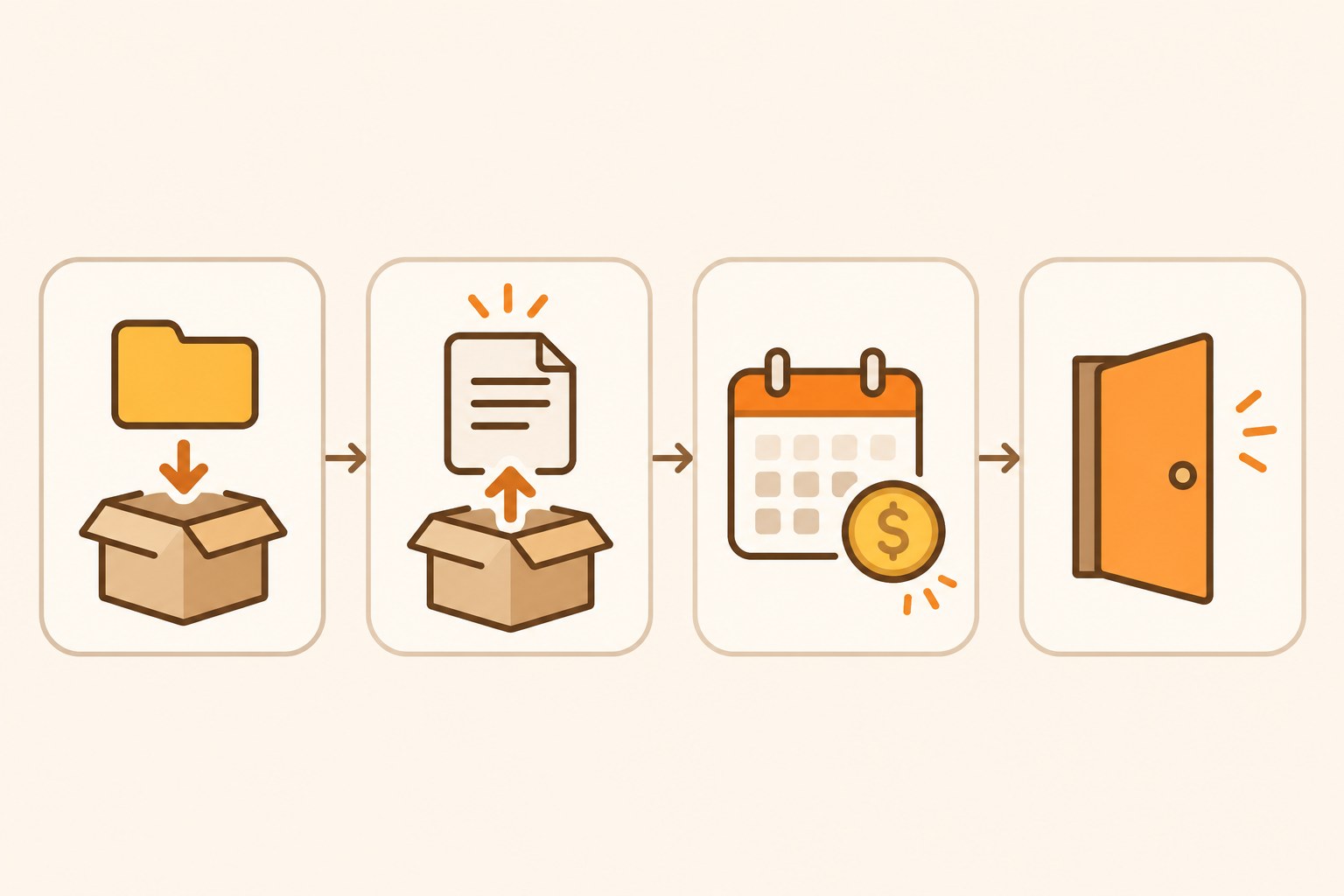
I use the same four questions on AI tools today. I call it the Supplier Test:
- What goes in? What data does the tool need? Your bank already sees your deposits. Does the AI also want your customer list, your invoices, your marketing plans?
- What comes out? Is the output better than what you get from the AI tools you already use? A marketing agent that writes bland social posts is not a gift, even for free.
- What does it cost later? Free early access, free training, and three free months are all real. Find out what happens on day 91.
- Can you leave? If you build your business plan, your campaigns, and your loan prep inside one bank's platform, can you export it? Or does leaving the bank mean starting over?
A bank AI tool might pass all four with flying colors. Great. Use it. The point is that you decide on purpose, with your eyes open.
Banks have spent a long time earning trust with your money. Their AI tools still have to earn trust with your work.
How I Run the Supplier Test in My Own Business and Home
I run Matchless Marketing with a workforce of AI agents. Each one has a written job description, and the rule that matters most is simple: nothing sends, posts, buys, signs, or spends without my yes. The agents draft. I decide. This article came out of one of those workflows. An agent did the research and the first draft. I get the final word.
That rule is the Supplier Test turned into a habit. My agents work from shared files I own. If I swap the AI underneath tomorrow, the files and the job descriptions stay with me. I never want my business stuck inside one company's tool.
Once a supplier passes the test, the next step is to keep one shared memory you own, so ChatGPT, Claude, and every other assistant start from the same page: How Do You Get ChatGPT and Claude to Remember the Same Things About Your Business?
At home, the same test saved us real money. Our family paid $50 a month for a family calendar service. When I asked the "what does it cost later" question honestly, the answer was "$600 a year, forever." My Digital Wall Calendar replaced it. It also ended the nightly "what does tomorrow look like" conversation in our house. That was Time, Money, and Energy back, all three.
My Weekly Meal Planner went through the same test. It replaced HelloFresh and ended the Sunday planning spiral. The real win was simple. We owned the system, and it fit our week.
So when a bank offers me an AI agent, I do not ask "is this cool?" I ask the four questions. If you have been wondering how much to let any AI tool decide for you, I wrote about that in is your AI assistant quietly making your business decisions for you.
Here is a quick example to make it concrete. This is a made-up business, not a client story.
Picture a dad who runs a lawn care business with one truck and a part-time helper. He signs up for a bank's AI studio because the loan readiness agent sounds handy. He wants a second truck next spring. Before he connects his bookkeeping, he runs the Supplier Test. He asks the bank three questions by email: what data the agent stores, whether it uses his data to train any AI model, and how to export his plan if he leaves. He gets clear answers on two. On the third, nobody knows yet. So he uses the loan agent with a summary he types in himself, not a live link to his books. He gets the checklist. He keeps his data. And he checks again in three months.
That is the whole game. Take the help. Keep the keys.
Which Bank AI Offers Fit Which Owners
Not every owner should jump in the same way.
Take the training now if you are in the big group that uses AI but has not built it into your week. Free classes and certificates cost you time, not data. If a program offers free access to a paid AI plan, use those months to build one real workflow you keep after it ends.
Try the tools carefully if you are starting a business or planning to borrow. Help with registration steps, licensing checklists, and lender expectations can save real hours. Start with information you would be fine sharing with any loan officer.
Hold off on connecting live data if the tool cannot answer the Supplier Test questions in writing. Huntington's announcement talked about keeping owners "in control," but it did not spell out a data policy or a price. Ask. A good partner will be glad you did.
If you already handed AI some of your money tasks, my post on whether to let AI chase your unpaid invoices and close your books covers the guardrails that matter. And for keeping AI costs from creeping up after a free period, see how to keep AI usage charges from surprising your small business.
Bank tools are not the only way AI can read your accounts. Claude's new Personal Finance feature connects through Plaid and stays read-only, a different trade from a bank's own AI tools. I compared the two in Should You Let AI Read Your Bank Account?.
7 Steps to Check Your Bank's AI Tools This Week
- Find out what your bank offers. Log in to your business banking app or call your banker. Ask one question: "Do you offer any AI tools or AI training for small business owners?" Write down the names and what each one claims to do.
- Take one free class first. Before you connect anything, sign up for one free training session from your bank or a program like Goldman's. Training costs you an hour. It does not cost you your data, and it makes you a sharper judge of every tool after it.
- Email the four Supplier Test questions. Send your bank this, word for word: "What data does this AI tool collect and store? Is my data used to train any AI model? What will it cost after the free period? How do I export my work if I leave?" Save the reply.
- Test it with a task you already know the answer to. Ask the marketing agent to write three social posts about your best service. Ask the loan agent what a lender would want to see. Compare the answers to what you already know. If the tool misses things you know, it will miss things you don't.
- Start with typed summaries, not live connections. Give the tool a short summary you write yourself, like your monthly revenue range and your top three expenses. Hold off on linking your bookkeeping or customer list until you have written answers to step 3.
- Set a calendar reminder for the end of "free." If a program gives you three free months of a paid AI plan, put a reminder on your calendar one week before it ends. Decide on purpose whether to pay, switch, or stop.
- Keep your own copy of everything. Save every plan, checklist, and campaign the tool makes into a folder you own, like Google Drive or Dropbox. If you ever leave the bank or the tool changes, your work comes with you.
Frequently Asked Questions
What is Huntington's The 1866 Studio?
The 1866 Studio is an AI-powered platform from Huntington Bank for small business owners, built with Google Cloud and its Gemini models. Announced October 19, 2026, its first features help with starting a business, creating marketing content, and getting ready for a loan. Early access sign-ups are open to owners who are not Huntington customers.
Do I have to be a customer to use a bank's AI tools for small business?
Not always. Huntington says early access to The 1866 Studio is open to small business owners who are not its customers. Goldman Sachs delivers its Small Business AI Institute through its 10,000 Small Businesses program. Each bank sets its own rules and its own sign-up steps, so read the sign-up page before you assume you qualify or don't.
Is it safe to give a bank's AI tool my business data?
It can be, but get the answers in writing first. Ask what data the tool stores, whether your data trains any AI model, and how you can export or delete it. Huntington's announcement did not list a detailed data policy. Until you have clear answers, share typed summaries instead of live account or bookkeeping connections.
Are bank AI tools better than ChatGPT or Gemini?
Not automatically. A bank's tool may know more about loans, lender expectations, and business setup steps. A general AI assistant may be stronger at open-ended writing and research. The best way to decide is to give both the same real task from your business, compare the answers, and keep whichever one saves you more time.
What is the Supplier Test for AI tools?
The Supplier Test is a four-question check from Warren Schuitema, based on how factories qualify new suppliers. Ask what data goes in, how good the output is, what the tool will cost after any free period, and whether you can leave with your work. If a tool passes all four, use it with confidence.
Take the Help. Keep the Keys.
Remember that mailbox? Statements and credit card offers.
The mail is changing. Your bank wants to be your business coach, your marketing helper, and your loan prep partner, all powered by AI. Some of that is a gift. Free training from the companies building these tools is worth your hour. A loan checklist that shows you the gaps before you walk into the bank could save you months.
But a gift is still a supplier relationship. And on every factory floor I ever worked, the rule was the same. You check the supplier before the part hits the line, not after.
So this week, ask your bank what it offers. Take one class. Send the four questions. Test the tool on something you already know. Keep your own copy of everything it makes for you.
Then ask the one question I ask about every system in my business and my home. Is it giving you back Time, Money, or Energy?
If it is, welcome it in.
If you cannot tell yet, you now know exactly what to ask.
Let the bank bring the tools. You keep the keys. That is A Better Way.
Keep Learning
- What Do Google's New AI Mode Ads Mean for Your Small Business? How to own the inputs when Google's AI decides where your ads show up.
- Should You Let AI Chase Your Unpaid Invoices and Close Your Books? The guardrails that make it safe to hand money tasks to AI.
- How Do You Keep AI Usage Charges From Surprising Your Small Business? Simple limits so no AI tool grows your bill without your yes.
- Can a Free AI Assistant Keep Your Small Business in Good Standing? Another free AI offer, and what to check before you rely on it.
About the Author
Warren Schuitema is an AI Systems Consultant with Matchless Marketing and Matchless AI. He spent 16 years in manufacturing and supply chain, where every new supplier had to prove itself before a single part reached the line. He brings that same habit to every AI system he builds. At home, his Digital Wall Calendar replaced a $50 a month subscription and his Weekly Meal Planner replaced HelloFresh. At work, he runs his business day to day with a workforce of AI agents that research and draft, and nothing goes out without his yes. He helps small business owners and parent entrepreneurs build practical AI systems that give back Time, Money, or Energy, and he is a partner in the Goal Achievers Summit.